
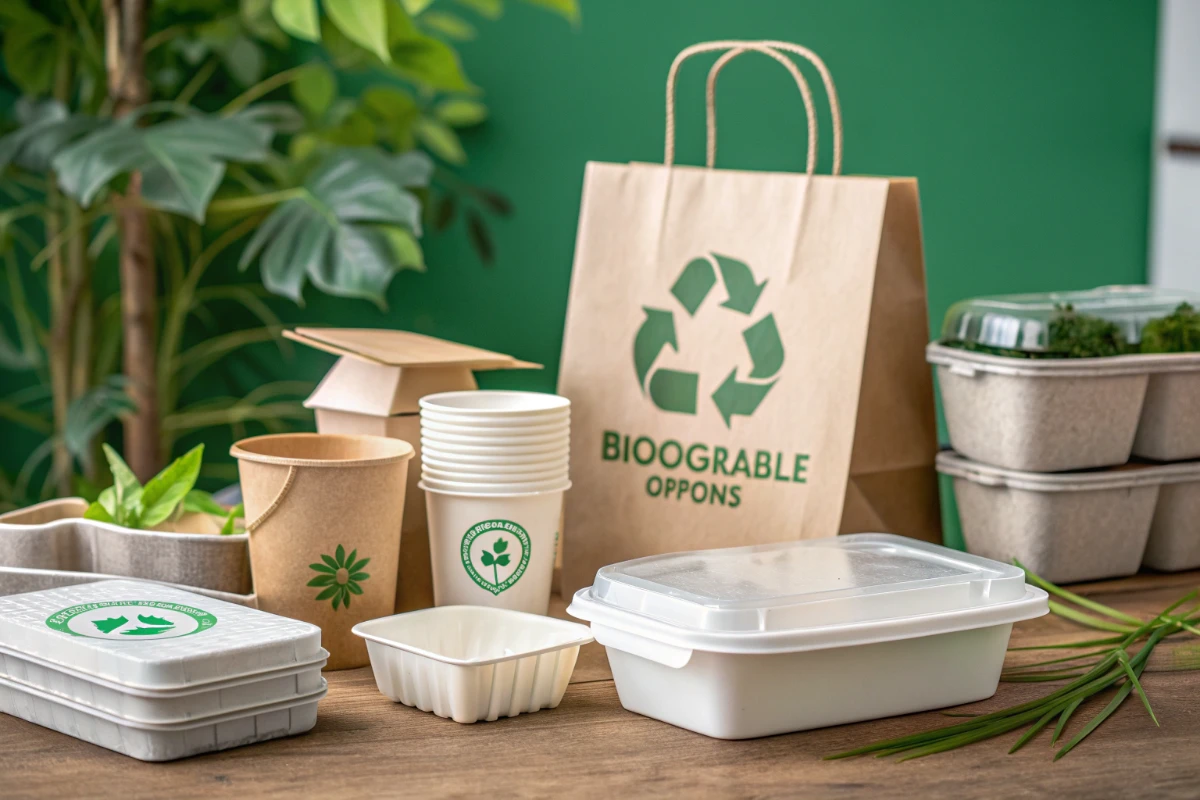
Businesses switching to compostable and biodegradable packaging often ask one question first: what raw material should we use? Choosing the right biodegradable raw material affects strength, shelf life, heat resistance, transparency, and end-of-life options (composting vs recycling vs biodegradation).
In this supplier guide, you’ll learn:
- what biodegradable raw materials are
- the main types used in packaging and manufacturing
- Biodegradable vs non-biodegradable materials
- Biodegradable vs compostable materials
- how to choose the right material for your application
- what to check when sourcing from a supplier
If you’re looking for biodegradable polymer pellets for film, bags, injection molding, or thermoforming, Samcome can help you select the right grade and supply it reliably.
What are biodegradable raw materials?
Biodegradable raw materials are materials that can break down naturally through the activity of microorganisms (like bacteria and fungi) under suitable conditions. In plastics and packaging, the term is often used for biopolymers and bio-based blends engineered to degrade more safely than conventional plastics.
In simple terms: Biodegradable materials are materials that nature can break down over time.
Points to remember: The speed and completeness of biodegradation depend on:
- temperature and humidity
- exposure to oxygen
- microbial activity
- material thickness and formulation
- disposal method (composting vs landfill vs soil) etc.
Definition of biodegradable materials
Biodegradable materials are substances that microorganisms can decompose into natural components within a reasonable time under suitable environmental conditions.
Examples of biodegradable materials
Below are common examples of biodegradable materials used in packaging and industrial applications.
-
Natural biodegradable materials
- paper and cardboard (uncoated)
- wood and bamboo
- cotton and natural fibers
- bagasse (sugarcane fiber)
- plant-based fibers and agricultural residues
-
Biodegradable polymers (bioplastics)
- PLA (Polylactic Acid)
- PHA (Polyhydroxyalkanoates)
- starch-based blends
- cellulose-based films
- PBAT blends (commonly used in compostable film formulations)
What are some biodegradable materials?
If you need a quick list of “what are some biodegradable materials,” here are common supplier-grade options:
- PLA resin/pellets
- PBAT/PLA flexible blends
- PHA resins
- starch-based biodegradable compounds
- cellulose-based materials
- bagasse fiber materials
- molded fiber raw materials
Main types of biodegradable raw materials (used in packaging)
Different biodegradable materials have different strength, flexibility, heat resistance, and composting behavior. Below is a practical breakdown for buyers and manufacturers.
-
PLA (Polylactic Acid) pellets
PLA is a widely used bio-based polymer made from renewable sources. It offers good clarity and stiffness, making it popular for:
Key properties
- rigid and clear (good for containers and thermoforming)
- good printability and appearance
- often needs industrial composting for fast breakdown
Common applications
- thermoformed food containers
- good printability and appearance
- packaging trays
- rigid injection molded items (depending on grade)
- Best for: rigid packaging, thermoformed products, clear applications.
-
PBAT + PLA blends (flexible packaging materials very common for compostable films)
PBAT blends are commonly used when flexibility and toughness are needed (bags/films).
Key properties
- flexible, soft, film-friendly
- better tear resistance than pure PLA
- widely used in compostable bag/film formulations
Common applications
- compostable shopping bags
- garbage bags
- flexible films and liners
- Best for: film and bag manufacturers who need balanced performance.
-
PHA (Polyhydroxyalkanoates) pellets
PHA is made by fermentation and is often promoted for broader biodegradability depending on the formulation.
Key properties
- biodegradable under more natural conditions (varies by type)
- can be rigid or flexible depending on grade
- often needs industrial composting for fast breakdown
Common applications
- premium sustainable packaging
- specialty disposable products
- niche industrial uses
- Best for: premium sustainable products and specialty packaging.
-
Starch / TPS (Thermoplastic Starch) pellets
Starch-based materials (TPS) are cost-effective and widely used in blends. They’re popular for:
Key properties
- renewable and affordable
- needs blending for performance in many cases
- good for certain bags and disposable items
Common applications
- biodegradable bags
- flexible packaging (depending on formulation)
- loose-fill packaging
- Best for: cost-effective compostable blends and flexible packaging.
-
Cellulose-based materials (paper and films)
Cellulose includes paper products and cellulose films.
Key properties
- biodegradable and widely recyclable (if uncoated)
- great for printing and branding
- cellulose films can be compostable depending on coatings
Common applications
- wraps, pouches (paper-based)
- labels, cartons
- cellulose film packaging
-
Bagasse & molded fiber materials
Bagasse (sugarcane fiber) and molded fiber are widely used in food packaging.
Key properties
- strong, heat-resistant
- good grease resistance (with proper design/coating)
- compostable and biodegradable
Common applications
- plates, bowls, trays
- clamshell containers
- takeaway packaging
How to choose the right biodegradable raw material (by application)
Film / bags / liners
Best starting options:
- PBAT
- PLA+PBAT blends
- TPS blends (depending on cost target)
Rigid containers / thermoforming
Best starting options:
- PLA (and PLA-based blends)
Injection molding (cutlery, caps, parts)
Depending on product requirements:
- PLA-based grades (rigid parts)
- blends designed for stiffness + heat performance
Heat resistance / durability requirements
You’ll often need:
- a specialized grade
- additives/blends
- process tuning
The best approach: tell the supplier your end product + process (film, injection, thermoforming) and we recommend the right grade.
What to check before buying from a biodegradable raw materials supplier
When you source raw materials, don’t only compare price. Check:
- Consistency: stable melt flow / processing stability
- Packaging options: bag size, pallet packing, moisture protection
- Lead time: can they ship regularly?
- Support: can they recommend grades for your machine?
- Documentation: SDS / TDS availability
- Quality control: batch consistency
Why manufacturers choose Samcome for biodegradable raw materials
Samcome supplies biodegradable raw materials and pellets designed for sustainable manufacturing. We support packaging and product manufacturers with:
- supplier-grade PLA / PBAT / PHA / starch-based options
- blend recommendations for film, bags, and rigid applications
- stable supply planning and export support
- technical guidance to match your process
Request a quote
Tell us your target product (film/bags, trays, injection parts), and we’ll recommend a suitable grade and provide a quotation.
FAQs "Most important questions that has been asked"?
What are examples of biodegradable raw materials?
PLA, PBAT, PHA, and thermoplastic starch (TPS) are commonly used biodegradable raw materials in packaging and manufacturing.
Are biodegradable and compostable the same?
Not always. Compostable materials must meet specific breakdown standards under composting conditions. Biodegradable is broader and depends on conditions.
Which material is best for compostable bags?
PBAT and PLA+PBAT blends are commonly used for compostable film and bags because they balance flexibility and toughness.
Which biodegradable material is best for rigid packaging?
PLA is often used for rigid packaging, especially thermoformed trays and containers.
How do I choose the right grade?
Share your application (film, injection, thermoforming), your machine type, and required properties. A supplier can recommend the right formulation.

I’ve been sourcing biodegradable raw materials for our packaging production, and Samcome has been a reliable partner so far. The quality of their PLA, PBAT, and PHA materials is consistent, and it works well for manufacturing products like bubble wrap, foam packaging, and trays without processing issues.
What I appreciate most is their responsiveness and willingness to provide clear product information, which makes decision-making much easier from a buyer’s perspective. Deliveries have also been on time, which is critical for keeping our production running smoothly.
Overall, a dependable supplier for anyone looking to shift toward sustainable packaging materials.